

When searching for the perfect moissanite stone, a stone’s clarity will play a pivotal role in its appeal. Stones with a VVS moissanite grade offer the ultimate combination of purity and affordability. But what is VVS moissanite?
VVS moissanite has extremely small inclusions that are difficult to detect under 10× magnification. VVS1 is the higher clarity grade, followed by VVS2. Both typically appear eye-clean without magnification.
In this guide, we’ll explain everything you need to know about VVS moissanite, from its minimal inclusions to how it compares with other clarity grades. We'll explore how clarity is determined, why VVS moissanite stands out, and how to select the perfect piece.
What Is Clarity in Moissanite Jewelry?
When selecting your ideal moissanite piece, a stone’s clarity is an important quality that strongly influences its visual appeal. Moissanite’s clarity rating indicates how clear and flawless it looks, showing the level of imperfections present in a given gemstone.
Clarity examines the gem's internal and external traits, referred to as inclusions or blemishes. These characteristics primarily affect how clear the stone appears. Larger or poorly placed inclusions may also interfere with light as it moves through the stone.
Understanding The Clarity Scale & Moissanite Grades
The clarity scale is a precise measure used to evaluate moissanite and other gemstones, such as diamonds. The scale categorizes moissanite from ‘Flawless’ to ‘Included,’ based on a stone’s inclusions and blemishes.
This grading system helps identify the level of purity and visual perfection of each moissanite stone.
Here’s a breakdown of what each rating signifies:
| GRADE | WHAT IT MEANS | VISIBLE WITHOUT MAGNIFICATION? | PRACTICAL BUYING CONSIDERATION |
|---|---|---|---|
| FL/IF | No inclusions, or only surface blemishes, under 10× magnification | No | Rarely necessary for an eye-clean appearance |
| VVS1 | Extremely small inclusions in less noticeable locations | Typically no | Premium grade, but usually indistinguishable from VVS2 by eye |
| VVS2 | Extremely small inclusions that may be slightly easier to locate under magnification | Typically no | Usually offers the same visible appearance as VVS1 |
| VS1/VS2 | Minor inclusions detectable under magnification | Usually no | A well-cut VS stone may still appear completely eye-clean |
| SI | More noticeable inclusions under magnification | Sometimes | Visibility depends on the stone, inclusion, size, and cut |
Each grade on this scale reflects a delicate balance between the stone's inherent beauty and its value.
How Is Moissanite Clarity Determined?
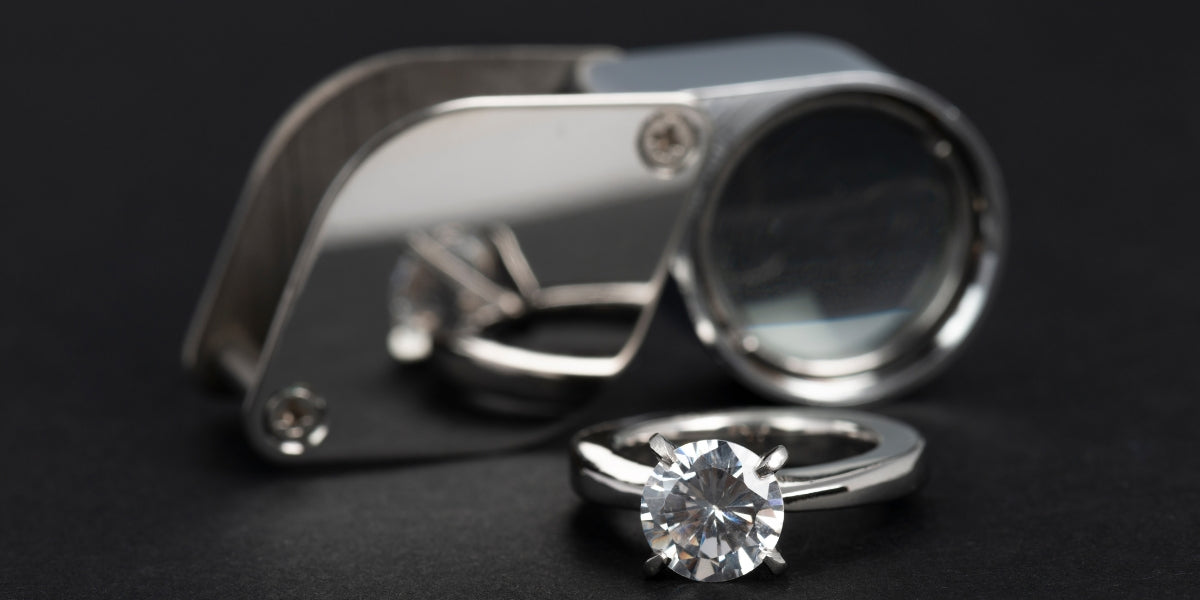
To gauge the clarity of moissanite, experts examine each stone closely using a jeweler's loupe. A loupe is a small yet powerful magnifying glass that enlarges the view of the stone by 10x. This tool helps identify any imperfections that might exist within the stone.
These imperfections are commonly broken up into two categories: inclusions and blemishes.
Inclusions refer to internal marks within the moissanite. These can be tiny dots, lines, or other shapes caused during the stone's creation process. Inclusions can appear in both naturally occurring moissanite and lab-created moissanite.
Blemishes refer to a stone’s surface flaws, such as scratches or pits. Blemishes often occur during cutting, setting, or wearing the stone.
Evaluating a stone’s clarity focuses on the nature, size, quantity, placement, and visibility of imperfections. Each aspect plays a role in determining the stone's clarity grade.
Given that almost all moissanite available today is crafted in controlled lab environments, these stones often exhibit fewer inclusions and blemishes than natural gems. This results in higher clarity ratings, often surpassing the rating of many diamonds.
What Is VVS Moissanite & What Makes It Special?
VVS moissanite represents one of the highest standards in moissanite clarity, standing for Very Very Slightly Included. This grade indicates that the stone has minute inclusions, which are nearly impossible to see with the naked eye.
VVS stones offer an eye-clean appearance with inclusions that are extremely difficult to detect, often at a lower price than comparably graded diamonds.
VVS Explained
VVS moissanite stones contain such slight inclusions that they are difficult to detect even under magnification. These inclusions are minor flaws formed during the crystal growth process, which can include tiny dots or lines.
Despite these minute characteristics, VVS moissanite typically appears as clear to the unaided eye as a stone with a higher clarity grade.
This grade is further subdivided into VVS1 and VVS2, with VVS1 having higher clarity and indicating even fewer and less noticeable inclusions than VVS2.
The Visual Impact of VVS Clarity on Moissanite
VVS moissanite typically appears eye-clean because its inclusions are extremely difficult to see without magnification. This allows the stone’s cut and faceting to remain the most noticeable features when viewed normally.
Clarity alone does not determine how much a stone sparkles. Cut quality has a more direct effect on brilliance and fire because it controls how light travels through and returns from the stone. Once two stones are eye-clean, a higher clarity grade may not create a visible difference in sparkle.
VVS Clarity D Color Moissanite Stones
VVS clarity D color moissanite combines a colorless appearance with inclusions that are extremely difficult to detect under 10× magnification. These grades describe the stone’s color and clarity, but they do not determine its cut quality or light performance.
This pairing creates a stone that appears colorless and eye-clean. Its visible brilliance and fire depend more directly on the quality and style of its cut. Whether chosen for an engagement ring, earrings, or a pendant, D color VVS moissanite offers a colorless, eye-clean appearance across many jewelry styles.
Selecting the Perfect VVS Moissanite
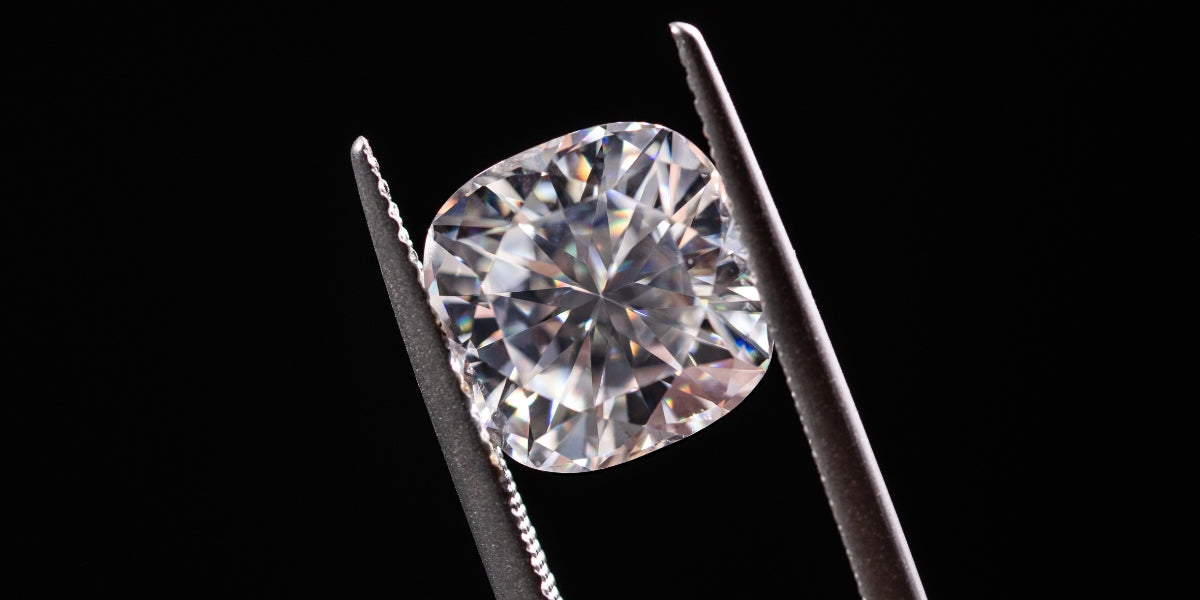
Choosing a VVS Moissanite means opting for a stone that combines exceptional clarity with a dazzling sparkle. This combination makes VVS moissanite the go-to option for those seeking the perfect blend of luxury and value.
Key Considerations When Choosing Your VVS Gemstone
Selecting the right VVS Moissanite involves several critical considerations to ensure it meets your expectations for beauty, budget, and brilliance.
Here are a few additional essential aspects to consider:
- Cut: The cut of the moissanite influences its overall appearance and how effectively it returns light. A well-executed cut directly affects its brilliance, fire, and overall appearance.
- Carat Size: The size of the moissanite affects its appearance and price. In larger stones, internal characteristics may be easier to notice, making the appearance of the individual stone especially important.
- Setting: The setting influences how the stone is presented and protected within the finished piece. Solitaire and halo settings can each emphasize its shape and faceting differently.
- Color: VVS moissanite can range from colorless to slightly tinted. A colorless grade creates a bright white appearance, while the stone’s cut determines how it returns light.
How Clarity, Color, and Cut Work Together
When comparing moissanite, avoid choosing each grade in isolation. Start with a stone that looks eye-clean, then judge how it performs as a whole. Paying more for VVS clarity offers little practical value if the cut appears uneven or the color looks different than expected in the finished setting.
The best combination also depends on where visible differences actually occur. Larger stones and open faceting can reveal characteristics that remain hidden in smaller or more heavily faceted cuts. Metal color and surrounding stones may also change how white the center appears.
Rather than automatically selecting the highest available grades, compare what each stone offers at its actual size and within the intended ring. This helps direct the budget toward differences you can see instead of distinctions that exist primarily on paper.
Embracing The Unmatched Beauty of VVS Moissanite
With its eye-clean appearance, durability, and accessible price, VVS moissanite appeals to buyers who value both beauty and practicality. This guide has explored what the grade means and what it can realistically change in a finished piece.
By prioritizing VVS clarity, TOVAA ensures every piece of jewelry shines with unmatched brilliance, reflecting our dedication to quality and beauty. When you choose TOVAA moissanite, you're not just choosing a gemstone; you're investing in a piece that combines the allure of near-perfect clarity with the practicality of an affordable price.
By choosing TOVAA, the exceptional clarity and precision of VVS moissanite is reflected in a ring made specifically for you. Every stone meets our VVS clarity standard, and Marlee can personally guide you through the design process to create a piece that is entirely custom.
You can book a consultation to begin your design, explore our In-Stock Collection for ready-to-ship options, or visit our Sale section for a remarkable value on a VVS moissanite ring.
However you choose to proceed, TOVAA jewelry reflects the same quality, brilliance, and attention to detail present in every piece we create.
Frequently Asked Questions:
What Are VVS Clarity D Color Moissanite Stones?
They are moissanite gemstones graded as VVS (Very Very Slightly Included) for clarity and D for color, meaning they are nearly flawless and completely colorless.
Why Choose VVS Clarity D Color Moissanite Stones?
This combination offers a colorless, eye-clean appearance. Its brilliance and fire depend primarily on the cut rather than the VVS clarity grade alone.
Do VVS Clarity D Color Moissanite Stones Look Like Diamonds?
D color VVS moissanite and high-grade diamond can both appear colorless and eye-clean, but they are not visually identical. Moissanite typically displays more colored fire and has different optical properties than diamond, while offering a more accessible price.


0 comments